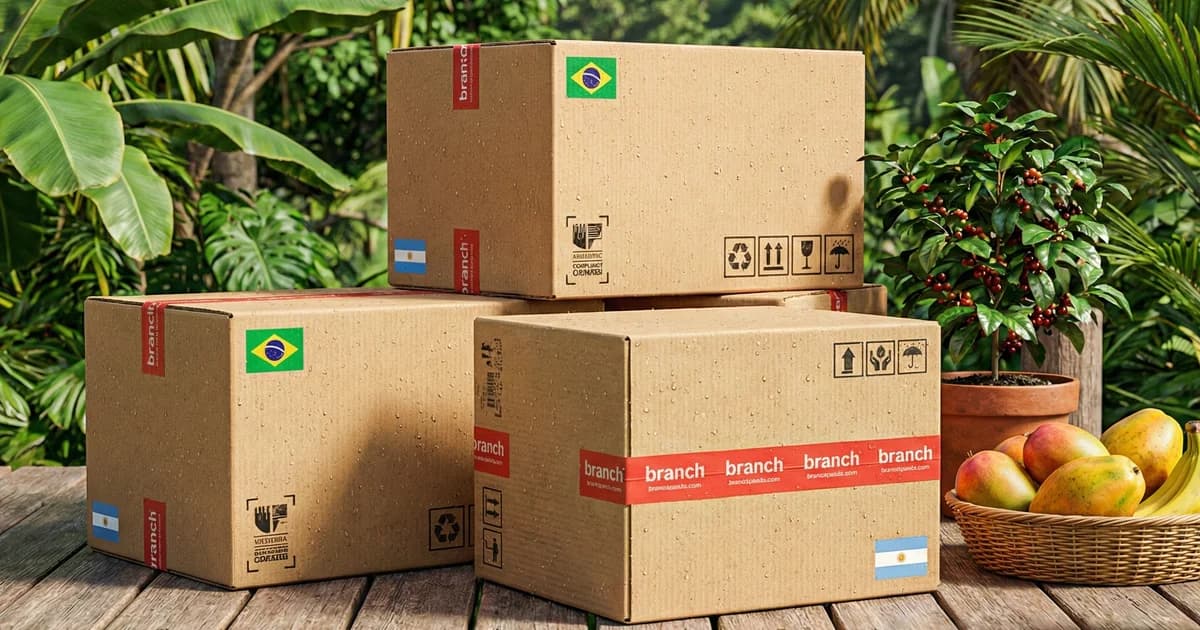
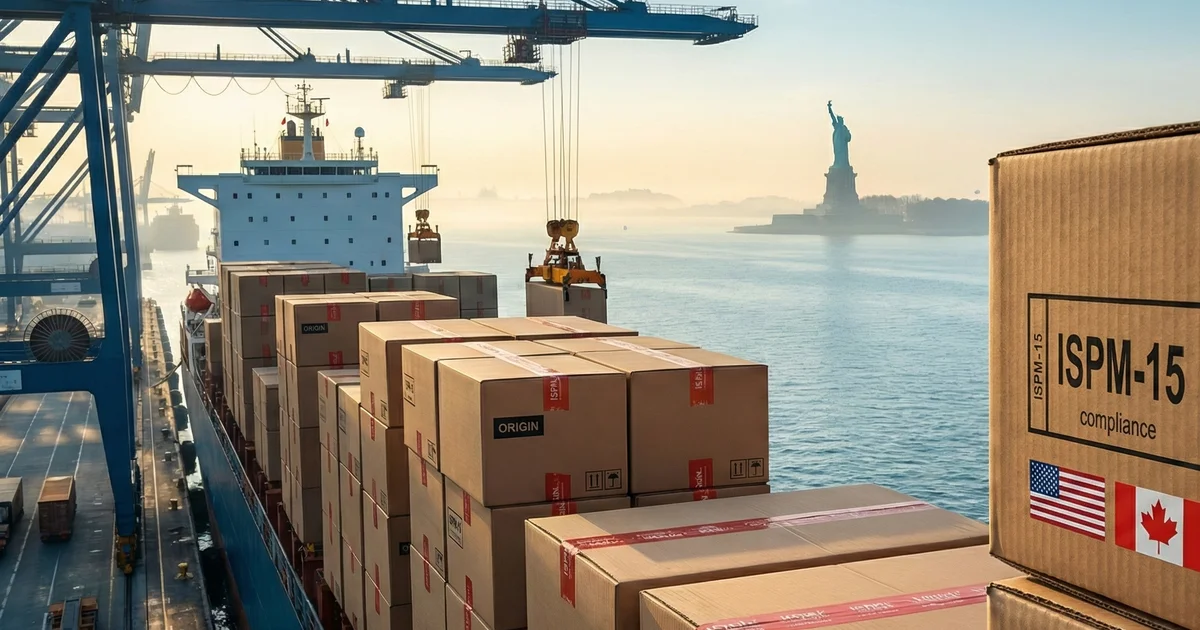
Comprehensive packaging guide for companies exporting to the USA and Canada. ISPM-15 exemption for corrugated, CBP origin marking, FTC Green Guides, Canadian bilingual labeling requirements, and the advantages of corrugated cardboard in transatlantic shipping.
Is Your Packaging Ready for the USA and Canada?
The United States and Canada maintain some of the strictest customs inspection regimes in the world. Is your packaging prepared for these controls? Shipments delayed or returned at customs due to incorrect materials, missing labels, or non-compliant environmental claims mean financial losses and reputational damage for exporters.
Turkey ranks among the fastest-growing corrugated packaging suppliers globally, with the USA standing alongside the UK and Germany as one of the top three export destinations for the Turkish packaging sector. But accessing these markets requires more than quality manufacturing -- it demands full compliance with the target country's regulatory framework.
This guide covers everything exporters shipping to the North American market need to know about packaging regulations, practical tips, and the strategic advantages of corrugated cardboard in these demanding markets.
Why Packaging Matters So Much in North America
The North American market treats packaging not merely as a protective wrapper but as the first physical touchpoint of a brand. Professional print quality, structural durability, and environmental compliance are fundamental requirements for competing in these markets.
Three core factors make packaging a critical success driver for North American exports:
- Rigorous customs inspections: U.S. Customs and Border Protection (CBP) and the Canada Border Services Agency (CBSA) meticulously inspect packaging materials to prevent the introduction of harmful organisms.
- Professional presentation expectations: North American buyers view packaging as a direct reflection of product quality. Poor print quality or damaged packaging erodes trust.
- Sustainability demands: Both consumers and regulators have rising expectations for recyclability, recycled content, and responsible sourcing in packaging.
United States: Regulatory Requirements
USDA APHIS and Wood Packaging Material Inspections
The Animal and Plant Health Inspection Service (APHIS), operating under the U.S. Department of Agriculture, is responsible for preventing the entry of harmful insects and organisms through imported packaging materials. These inspections primarily target solid wood packaging materials such as pallets, crates, and dunnage.
ISPM-15 and the Major Advantage of Corrugated Cardboard
The ISPM-15 standard under the International Plant Protection Convention requires wood packaging materials used in international trade to undergo heat treatment or fumigation and bear the IPPC mark. However, there is a critically important detail for exporters:
Corrugated cardboard is exempt from ISPM-15. This standard applies only to solid (raw) wood materials thicker than 6 mm. Corrugated cardboard, manufactured from wood pulp through high heat and pressure processing, is classified as a "processed wood product" and is entirely exempt from ISPM-15 requirements.
What does this exemption mean in practice?
- No heat treatment or methyl bromide fumigation required
- No IPPC (International Plant Protection Convention) marking obligation
- No additional certification costs or processing delays
- Zero risk of customs detention related to wood packaging inspections
This provides significant cost and time savings for exporters using corrugated packaging. The value of choosing corrugated has grown even further since January 1, 2026, when the USA resumed strict enforcement of the hyphen format in ISPM-15 marks (the hyphen between country code and facility code: XX-000). Non-compliant wood packaging shipments will be held at the port of arrival or returned -- with no grace period whatsoever.
CBP Country of Origin Marking Requirements
U.S. Customs and Border Protection (CBP), under 19 CFR 134, requires that all articles imported into the United States -- or their containers -- be marked with the country of origin in English. This marking must be:
- In English (e.g., "Made in Turkey" or "Product of Turkey")
- Legible and positioned in a conspicuous location
- Permanent -- it must not be easily erased, removed, or defaced
- Placed so the ultimate purchaser can see it before purchase
Non-compliance can result in additional customs duties, penalties, and shipment detention. With offset-printed corrugated packaging, the country of origin marking can be integrated directly into the box design, simultaneously ensuring compliance and maintaining a professional appearance.
FTC Green Guides: Environmental Claims Under Scrutiny
The Federal Trade Commission's (FTC) Green Guides regulate how environmental claims on packaging must be presented. Under these guides:
- General claims are prohibited: Simply stating "eco-friendly" or "green" is insufficient
- Claims must be specific: Use concrete statements like "Made from 30% recycled material"
- Claims must be substantiated: Every environmental claim must be supported by reliable scientific evidence
- "Recyclable" claims: You must demonstrate that the product or packaging can actually be processed at recycling facilities available to consumers in the relevant area
Corrugated cardboard holds a strong position here: with a recycling rate exceeding 90% in North America, this is a well-substantiated environmental claim. However, when including such statements on your packaging, compliance with the FTC Green Guides remains critical.
Canada: Regulatory Requirements
Federal Plastics Registry
Canada has launched the Federal Plastics Registry to track and reduce plastic packaging waste. Under Phase 1, producers, importers, and those who place plastic packaging on the market are required to report 2024 data by September 29, 2025. Phase 2, beginning in 2026, will expand reporting requirements to resin manufacturers and importers.
This regulation creates an indirect advantage for exporters using corrugated cardboard packaging: fully paper-based corrugated is exempt from the Plastics Registry reporting obligations. However, if your packaging includes plastic tape, stretch film, or plastic window components, be aware that your Canadian importer may be affected by these requirements.
Provincial Extended Producer Responsibility (EPR) Programs
Packaging regulations in Canada vary by province, creating a complex landscape for exporters:
- Ontario: Completing its full EPR transition by January 1, 2026. Producers must meet material-specific recycling targets and register through the Resource Productivity and Recovery Authority (RPRA).
- British Columbia: Operates a comprehensive EPR program managed by RecycleBC, collecting over 200,000 tonnes of packaging and paper products annually.
- Other provinces: Canada has nine active EPR laws across the country, each with different timelines, covered materials, and structures.
A critical point: the definition of "producer" varies from province to province. In some jurisdictions, the importer qualifies as the "producer," while in others, the brand owner carries this responsibility. Clarifying this with your Canadian buyer will strengthen your commercial relationship.
Bilingual Labeling Requirements
The Consumer Packaging and Labelling Act requires that all products sold in Canada include label information in both English and French. This requirement covers:
- Product identity must be stated in both languages
- Net quantity declarations must appear in English and French
- Information in both languages must be of equal size and prominence
Additionally, Quebec's Bill 96, which took effect in June 2025, requires that French text must not be given lesser prominence than other languages. For products destined for Quebec, French text must appear before other languages and in a font size at least equal to other languages.
With offset-printed corrugated packaging, bilingual labeling can be incorporated directly into the box design, ensuring both legal compliance and professional presentation.
Transatlantic Shipping Durability
Sea freight from Turkey to North America takes an average of 15 to 25 days under demanding conditions. The primary challenges your packaging will face during this journey include:
- Humidity and temperature fluctuations: In-container temperatures can shift dramatically during the Mediterranean-to-Atlantic crossing. This can cause in-container condensation ("container sweat") that weakens packaging.
- Stacking pressure: Boxes stacked within containers endure constant compression throughout transit. Dynamic loads from wave motion further intensify this pressure.
- Handling and transfers: Resistance to mechanical impacts during loading, unloading, and warehouse transfers is critical.
Proper flute profile selection, appropriate flute combinations, and moisture-barrier coatings ensure corrugated packaging withstands these demanding conditions. E-flute is ideal for fine and delicate products, while BC-flute combinations provide superior stacking strength for heavy and industrial goods.
Professional Print Quality Expectations
The North American market holds high standards for packaging print quality. In a market where shelf competition is fierce, packaging serves as a product's "silent salesperson."
Offset printing technology enables photographic-quality visuals on corrugated cardboard, meeting this expectation. Pantone color matching, high-resolution graphics, and consistent color reproduction deliver the professional appearance that North American retailers and consumers expect.
Furthermore, regulatory information such as origin marking, environmental claims, and bilingual labeling must be integrated without compromising print quality. Offset-printed corrugated cardboard combines both aesthetic and compliance requirements in a single solution.
Sustainability as a Competitive Advantage
In North America, sustainability has shifted from a preference to an expectation. Buyers in both the USA and Canada are seeking concrete steps to reduce environmental impact across their supply chains.
- SFI and FSC certifications: The Sustainable Forestry Initiative (SFI) and Forest Stewardship Council (FSC) certifications are significant trust signals for North American packaging procurement. These certifications prove that the cellulose fibers used are sourced responsibly.
- Recycled content: Stating the specific percentage of recycled material in your packaging with concrete figures is both FTC Green Guides-compliant and valuable information for buyers.
- Recyclability: Corrugated cardboard's 90%+ recycling rate in North America is a well-substantiated sustainability advantage.
- Carbon footprint: Lightweight corrugated packaging reduces shipping weight, lowering overall carbon emissions.
Backing your sustainability claims with concrete data not only ensures regulatory compliance but also builds long-term commercial relationships with North American buyers.
The Strategic Advantages of Corrugated Cardboard
For exports to North America, corrugated cardboard packaging offers a series of strategic advantages over other packaging materials:
- ISPM-15 exemption: Fully exempt from heat treatment, fumigation, and certification processes required for wood packaging
- Lightweight: Reduces shipping costs and allows more products per container
- Recyclability: 90%+ recycling rate meets North America's sustainability expectations
- Print quality: Offset printing enables photographic-quality visuals and Pantone color matching
- Customizability: Custom sizing, durability specifications, and print designs tailored to each product
- Compliance simplicity: Origin marking, environmental claims, and bilingual labeling can be integrated directly into the print design
- Plastics Registry advantage: Fully paper-based corrugated is exempt from Canada's Federal Plastics Registry obligations
Practical Checklist for North American Exporters
Review this checklist before sending your shipment to North America:
- Verify whether your packaging material falls under ISPM-15 -- corrugated cardboard is exempt, but if you use wooden pallets, ensure they are compliant
- If wooden pallets are used, confirm the ISPM-15 mark uses the correct hyphen format (XX-000)
- For U.S. shipments, ensure "Made in Turkey" or "Product of Turkey" origin marking is legible and permanent
- For Canadian shipments, verify that all label information appears in both English and French with equal prominence
- For products destined for Quebec, confirm French text appears before other languages and in at least equal font size
- Ensure all environmental claims on packaging are specific and substantiated
- Verify that moisture-barrier coatings and flute combinations are appropriate for transatlantic shipping conditions
- Test stacking strength for in-container conditions
- Confirm print quality meets North American market expectations
- Clarify EPR obligations and the "producer" definition with your Canadian buyer
- Assess the impact of Canada's Federal Plastics Registry if your packaging contains any plastic components
Choose the Right Packaging Partner for Your Exports
At MFS Ambalaj, we have been dedicating the majority of our production to export-oriented companies since 2011. We have built substantial experience in packaging solutions designed for markets with the highest standards, including the USA and Canada.
Our offset-printed corrugated boxes, manufactured with moisture-barrier and durable materials, protect your products throughout transatlantic shipping conditions while meeting North America's strict customs and sustainability expectations. We also provide R&D support for size, material, and print optimization tailored to the specific product you are exporting.
The positive feedback we receive from our export clients' North American buyers confirms that the right packaging builds not just protection, but brand trust.
Contact us for your export packaging needs:
- Phone: +90 332 345 43 03
- Email: info@mfsambalaj.com
- Web: mfsambalaj.com/iletisim
Get in touch for a packaging solution tailored to your product and target market -- let us prepare a custom proposal for you.