Choosing the right export packaging prevents customs issues, reduces shipping damage, and strengthens your brand. From ISPM-15 exemptions to TSE standards, common exporter mistakes to practical checklists — everything you need is in this guide.
You are planning to export — or perhaps you already ship internationally on a regular basis. Your product is top-quality, your pricing is competitive, and your buyer is ready. But did you know that your packaging can make or break the entire deal? One of the most painful scenarios we have witnessed over the years is this: an excellent product gets held up at customs, arrives damaged, or loses its perceived value in the buyer's eyes — all because of the wrong packaging.
Since 2011, MFS Ambalaj has been directing 85 to 90 percent of its production toward exporting companies. Working with hundreds of exporters across diverse industries has taught us one thing very clearly: in international trade, packaging is a strategic decision as important as the product itself. In this guide, we have compiled everything you need to know about export packaging — from standards and practical tips to industry data and the most common mistakes.
Why Export Packaging Is So Critical
The Risk of Customs Rejection
In international trade, packaging is not simply a material that wraps around your product — it essentially functions as a document. Packaging that does not comply with the destination country's customs regulations can cause your shipment to be detained at the border or even sent back. This is not just a financial loss; it is a blow to customer trust.
Damage Rates During International Shipping
A product changes hands an average of 17 to 20 times during its export journey. Research shows that approximately 40 percent of product damage in international shipping stems from inadequate or unsuitable packaging. The right packaging can reduce this damage rate by up to 80 percent.
Brand Perception at the Destination
When your product reaches the buyer, the first point of contact is the packaging. A high-quality printed, sturdy, and professional-looking box creates a positive impression before the product is even opened. In exports, packaging is a silent sales representative — and you never get a second chance at a first impression.
The Major Advantage of Corrugated Cardboard: ISPM-15 Exemption
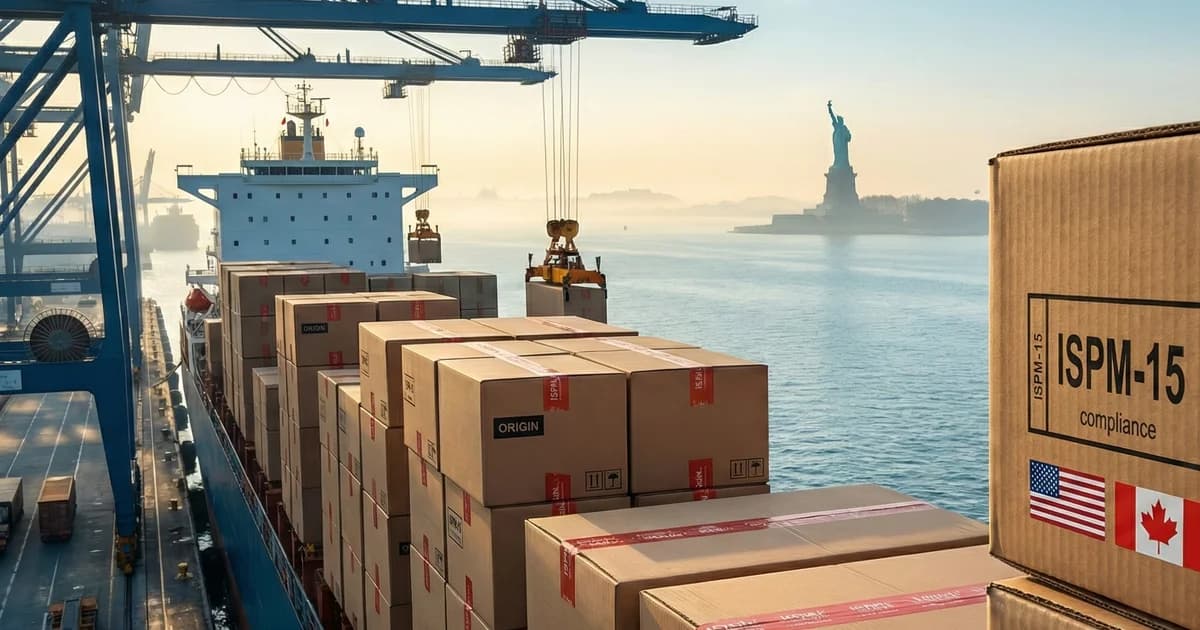
One of the most important regulatory topics for exporting companies is ISPM-15 (International Standards for Phytosanitary Measures No. 15). This standard requires that wood packaging materials used in international trade be treated to prevent the spread of harmful organisms. Solid wood packaging thicker than 6 mm falls within this scope and must undergo heat treatment or fumigation, followed by IPPC marking.
Here is where a crucial advantage comes in for exporters: Corrugated cardboard is exempt from ISPM-15. Because corrugated board is manufactured from processed cellulose fibers, it carries no risk of harboring harmful organisms.
- No heat treatment required — Saves time and cost
- No fumigation needed — Eliminates chemical treatment expenses and delays
- No IPPC marking obligation — Reduces documentation burden
- Lower risk of customs delays — Exemption from phytosanitary inspections speeds up the process
If you are exporting to markets where ISPM-15 inspections are strictly enforced — such as Australia, New Zealand, EU countries, and the United States — using corrugated cardboard boxes provides a significant logistical advantage.
TSE Standards: Compliance for Exports from Turkey
For companies exporting from Turkey, compliance with Turkish Standards Institute (TSE) standards is both a legal requirement and a quality assurance measure.
TS 3026 — Corrugated Cardboard Boxes
This standard defines the general characteristics, dimensioning rules, and performance requirements for boxes made from corrugated board.
TS EN ISO 2759 — Burst Strength
This standard measures how much hydraulic pressure a board can withstand before bursting. Burst strength is a critical parameter for export packaging because your product will be subjected to pressure, impacts, and stacking loads during transit.
TS EN ISO 16106 — Packaging for Dangerous Goods Transport
If the products you export fall under the dangerous goods classification, your packaging must comply with this standard.
Top 5 Packaging Mistakes Exporters Make
1. Not Optimizing Box Dimensions for the Product
An oversized box increases shipping costs; an undersized box causes the product to be compressed and damaged. Custom dimensions should be calculated for each product.
2. Ignoring Climate Conditions
A product leaving Turkey may be exposed to Northern Europe's cold, the Middle East's humidity, or tropical conditions during ocean transit. Selecting materials suited to the destination's climate is non-negotiable in export packaging.
3. Overlooking Stacking Strength
When boxes are stacked inside a container, the bottom box must bear the weight of everything above it. Ordering boxes without calculating stacking strength can result in crushed products in the bottom rows.
4. Neglecting Print Quality
Your export packaging is the face of your product in a foreign market. Offset printing technology delivers high-resolution results with excellent color consistency. Print quality is the first visible proof of product quality.
5. Skipping Packaging Tests
Every batch of boxes should be tested. Burst strength, crush resistance, and moisture endurance tests reveal whether your packaging can withstand real shipping conditions.
Industry Statistics: Turkey's Corrugated Cardboard Market
- Market size: Turkey's corrugated cardboard market reached approximately $2.71 billion as of 2024 and is projected to grow to $3.82 billion by 2033.
- Leading Middle East supplier: Turkey accounts for 47 percent of total corrugated paper exports to the Middle East region.
- Top export destinations: Turkish corrugated products are most heavily exported to the United Kingdom, Germany, and the United States.
- Sustainability advantage: Corrugated cardboard, with a recyclability rate exceeding 90 percent, offers a significant edge in meeting environmental regulations.
Practical Packaging Checklist for Exporters
- Check the destination country's packaging regulations
- Calculate box strength based on product weight
- Evaluate the shipping route and duration
- Select materials suited to the climate
- Verify printing and labeling requirements
- Plan internal cushioning and securing
- Conduct sample testing
- Check pallet compatibility
- Prepare your customs documentation
- Discuss export experience with your packaging supplier
Choose the Right Partner for Your Export Packaging
Since 2011, MFS Ambalaj has been directing the majority of its production toward exporting companies. Over the years, working with exporters across diverse industries has allowed us to build substantial expertise in packaging solutions that meet international standards.
Our offset-printed corrugated boxes, manufactured with moisture-barrier and durable materials, protect your products during international transit while ensuring a smooth customs process. We also provide R&D support for dimension, material, and print optimization tailored specifically to the product you are exporting.
The positive feedback we receive from our exporting clients' overseas buyers proves that the right packaging builds not just protection, but brand trust.
Get in touch with us for your export packaging needs:
- Phone: +90 332 345 43 03
- Email: info@mfsambalaj.com
- Web: mfsambalaj.com/contact
Contact us today for a packaging solution customized to your product and target market — let us prepare a tailored proposal for you.