Asian markets are extremely sensitive to packaging quality. We compiled the standards, labeling requirements, and logistics tips that companies planning to export to China, Japan, and South Korea need to know.
Your Gateway to Asian Markets Starts with Your Packaging
Asian markets are extraordinarily quality-conscious. Your packaging must reflect the quality of your product — because the first impression starts with the box. China, Japan, and South Korea represent the three largest Asian economies in world trade, and each has its own distinct packaging standards, consumer expectations, and regulatory frameworks.
For companies exporting from Turkey to Asia, the right packaging choice goes far beyond physical product protection. Your packaging simultaneously reflects your brand's quality perception, your compliance with local regulations, and the professionalism of your logistics processes. In this guide, we will examine the packaging requirements for these three critical markets in detail.
Why Packaging Matters So Much in Asia
In Asian markets, packaging carries a significantly different meaning compared to Western markets. In Japan, packaging is an integral part of gift-giving culture. In China, the appearance of packaging is directly associated with product quality. In South Korea, consumers expect packaging to be both environmentally friendly and aesthetically satisfying.
Beyond these cultural expectations, all three countries maintain strict technical standards and labeling requirements for packaging in their import processes. Products that fail to meet these requirements face the risk of being held at customs, returned, or incurring additional costs.
Additionally, the intense competition in Asian markets further elevates the importance of packaging. If you want to stand out among similar products, the quality and presentation of your packaging becomes a decisive differentiator.
China: The World's Largest Import Market
GB/T 6544 Corrugated Cardboard Standard
Corrugated cardboard packaging exported to China is expected to comply with the GB/T 6544 standard. This standard defines the physical properties of corrugated board — burst strength, crush resistance, moisture absorption, and dimensional tolerances. As an exporter, it is important to request test reports from your packaging supplier confirming compliance with this standard.
CIQ Certification and Customs Process
CIQ (China Inspection and Quarantine) inspection is applied to all imports into China. CIQ operates under the General Administration of Customs of China (GACC) and conducts comprehensive quality and safety inspections including the packaging of imported products.
The key elements CIQ inspectors focus on include:
- Compliance of packaging materials with quality standards
- Completeness and accuracy of labeling information
- Sufficient structural durability to protect product integrity during transport
- Declarations regarding the absence of harmful substances
Labeling Requirements
Products shipped to China carry a mandatory Chinese-language labeling requirement. Labels must include the product name, country of origin, manufacturer information, quantity, and relevant warning symbols.
The updated GB 7718-2025 labeling standard introduces more detailed and consumer-oriented information requirements. Companies have been granted a transition period until March 2027 to achieve full compliance. Exporters are advised to complete their preparations during this transition period and update their label designs to meet the new requirements.
It is essential to note that all text on packaging must be written in Simplified Chinese. Traditional Chinese is not accepted for mainland China imports.
Japan: The Pinnacle of Quality
Consumer Expectations
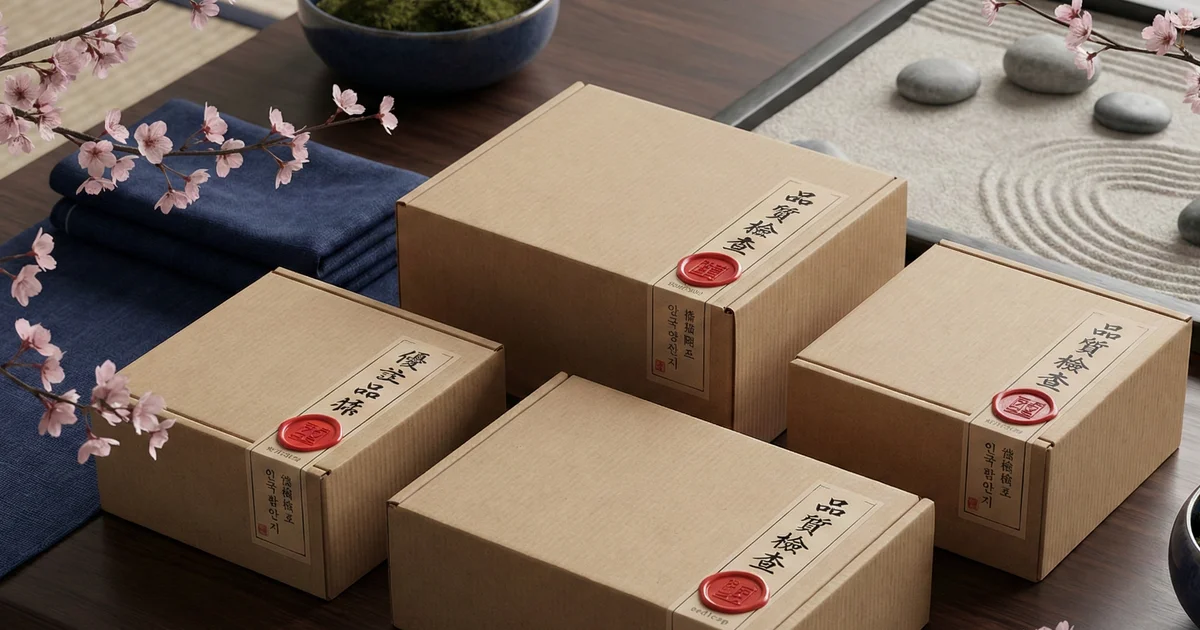
Japan is one of the markets with the highest packaging quality expectations in the world. For Japanese consumers, packaging is an inseparable part of the product. The corner joints of the box, print quality, color consistency, and even the tactile experience of opening the box all influence the purchasing decision.
Therefore, companies exporting to Japan must operate with a zero-defect tolerance in packaging quality. Bear in mind that even a slight print misalignment, edge damage, or color variation can lead to product returns.
Containers and Packaging Recycling Law
Japan's Containers and Packaging Recycling Law designates all companies selling packaged products as "specified business entities" and imposes recycling obligations on them. Companies exporting products to Japan and selling them in packaging may also fall within this scope.
There is an important advantage for corrugated cardboard packaging: corrugated board falls under Japan's voluntary industry system and does not require mandatory labeling. However, corrugated packaging is expected to be designed for recyclability and not mixed with other materials.
JIS Standards
Japanese Industrial Standards (JIS) establish comprehensive technical requirements for corrugated packaging covering dimensions, material quality, labeling, and safety. The primary relevant standards include:
- JIS Z 0401: Corrugated box dimensions and design principles
- JIS Z 0402: Corrugated board testing methods
- JIS P 8131: Burst strength testing
While compliance with these standards is not mandatory for imports to Japan, Japanese buyers typically reference JIS standards when expressing their quality expectations. Knowing these standards and using them as benchmarks in your production processes provides a critical advantage in building trust with Japanese business partners.
South Korea: Environmental Sensitivity and Technical Standards
Heavy Metal Limits
South Korea enforces strict limits on heavy metal content in packaging materials. The combined total of lead, cadmium, mercury, and hexavalent chromium in packaging must not exceed 100 mg/kg. These limits align with the EU Packaging Directive and are monitored by the Korean Ministry of Environment.
Offset printing inks and coatings are also evaluated under these limits. Therefore, it is critically important that the heavy metal content of inks and varnish/coating materials used in production is properly documented.
DEHP Restriction
South Korea has restricted the use of DEHP (Di-2-Ethylhexyl Phthalate) in packaging materials. DEHP is not permitted in packaging where migration possibility exists. Corrugated cardboard packaging generally does not pose a DEHP concern; however, it is advisable to verify this across your supply chain, particularly for inks, adhesives, and coatings.
Labeling and Recycling Marks
South Korea mandates Korean-language labeling on packaging. Product name, manufacturer/importer information, country of origin, and relevant warnings must be specified in Korean. Additionally, material type and recycling symbols must be displayed on the packaging.
Extended Producer Responsibility (EPR) System
South Korea's EPR (Extended Producer Responsibility) system imposes recycling obligations on companies selling packaged products. Under this system, companies introducing packaged products to the Korean market (including importers) are required to meet specific recycling targets or pay recycling fees.
Corrugated board holds an advantageous position within the EPR system due to its high recyclability rate. This represents another important reason to prefer corrugated cardboard packaging when exporting to Korea.
Asian Logistics and Container Conditions
Maritime shipping from Turkey to Asia typically takes 20 to 35 days, and containers pass through various climate zones during this journey. The hot and humid conditions of the Mediterranean, the extreme heat of the Red Sea, the monsoon conditions of the Indian Ocean, and the tropical or cool climates encountered at destination — all of these expose your packaging to diverse environmental conditions.
Container Condensation Risk
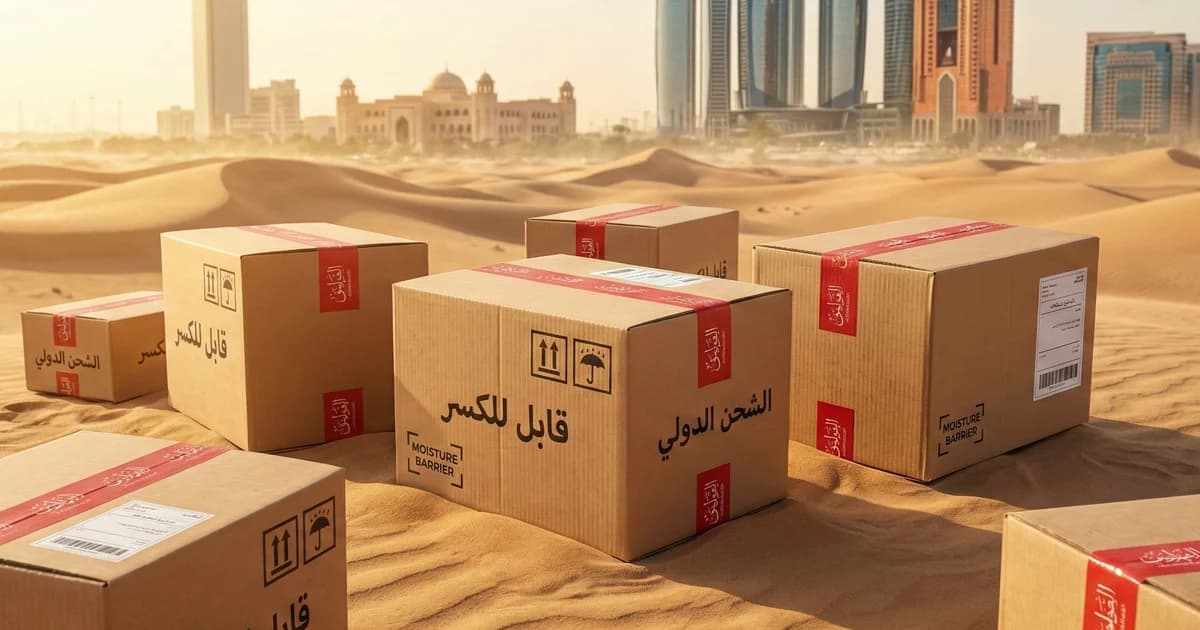
One of the greatest risks in long-distance maritime shipping is container condensation (container rain/sweat). Temperature differences between day and night cause moisture to form on the interior surfaces of the container. This moisture can penetrate packaging materials, weakening the structural integrity of boxes.
Measures that can be taken against this risk include:
- Using moisture-barrier corrugated board (water-repellent coating or lamination)
- Placing desiccant packs inside containers
- Positioning products on pallets, elevated from the container floor
- Maintaining burst strength and crush resistance above standard values
Monsoon Season Planning
The monsoon season occurs in Southeast and East Asia from June to September. During this period, port operations may experience delays and humidity levels peak. If you are planning shipments during monsoon season, it is recommended to take extra precautions in packaging quality and add buffer time to delivery schedules.
Print Quality as a Brand Signal
In Asian markets, the print quality of packaging is a factor that directly determines the quality perception of the product and brand. Particularly in Japan and South Korea, consumers are extremely sensitive to print quality on packaging. Faded colors, low-resolution graphics, or inconsistent color tones are perceived as indicators of poor product quality.
Offset printing is the most suitable printing technology to meet these high expectations. Compared to flexographic printing, offset printing offers the following advantages:
- High resolution: Fine details, small fonts, and photorealistic images are printed with sharp clarity
- Color consistency: Pantone color matching ensures your brand colors remain identical across every production run
- Premium appearance: Matte/gloss varnish, embossing, and other special effects create a luxury packaging experience
- Wide color gamut: CMYK plus spot colors enable virtually unlimited color combinations
For a brand competing in the Asian market, your packaging print quality is at least as important as your product quality.
The Corrugated Advantage for Asian Export
Corrugated cardboard offers a range of strategic advantages as a packaging material for export to Asia:
- ISPM-15 exemption: As a paper-based product, corrugated board is exempt from ISPM-15 (International Standards for Phytosanitary Measures) wood packaging treatment requirements. This accelerates customs processes and eliminates additional costs.
- Excellent print surface: It provides an ideal surface for offset printing, with premium print quality achievable especially on kromelux or white kraft-lined corrugated boards.
- Lightweight construction: Reduces freight costs in long-distance maritime shipping. Weight reduction yields significant cost savings, particularly for large-volume shipments to Asia.
- Recyclability: With over 90% recyclability rates, corrugated board holds a major advantage in environmentally conscious markets like Japan and South Korea.
- Versatility: Easily customizable for different product dimensions and protection requirements. Internal separators, dividers, and protective structures can be produced and integrated using the same material.
Practical Packaging Checklist for Asia Exporters
Review the following checklist before shipping products to Asian markets:
- Research target country standards: Check GB/T 6544 for China, JIS for Japan, and heavy metal and DEHP limits for South Korea.
- Meet labeling requirements: Prepare labels in Simplified Chinese for China, Japanese for Japan, and Korean for South Korea.
- Have local language verification done: Always have label translations and designs reviewed by a native speaker of the target language. A small translation error can result in significant reputational damage.
- Test moisture resistance: Test your packaging's moisture barrier properties for long maritime shipping and apply water-repellent coating if necessary.
- Increase burst and crush resistance: Target durability values above standard domestic levels. Leave an extra safety margin for long journeys and stacking pressure.
- Verify print quality: Maintain color consistency, resolution, and surface quality at levels meeting Asian market expectations.
- Prepare customs documentation: Complete packaging material certificates, test reports, and compliance declarations before shipment.
- Add recycling marks: Indicate material type and recycling symbols on packaging, especially for South Korea and Japan.
- Plan for monsoon season: For shipments between June and September, implement extra moisture protection and allow additional delivery time.
- Send samples: Before placing a large order, send sample packaging to your Asian buyer for approval. This step is virtually mandatory for Japan.
Choose the Right Partner for Your Export Packaging
At MFS Ambalaj, we have dedicated the majority of our production to serving exporters since 2011. With a team that deeply understands the high quality expectations and detailed technical requirements of Asian markets, we provide our export clients with packaging solutions that meet these demanding standards.
Our offset-printed corrugated boxes deliver the premium print quality that Asian markets expect, meeting their demanding quality expectations and premium presentation standards. Meanwhile, our moisture-barrier and durable material construction safely protects your products during the extended maritime shipping routes to Asia. We also offer R&D support for custom size, material, and print optimization tailored to the specific product you are exporting.
The positive feedback we receive from our export clients' overseas buyers proves that the right packaging builds not just protection, but brand trust and credibility in these highly competitive markets.
Contact us for your export packaging needs:
- Phone: +90 332 345 43 03
- Email: info@mfsambalaj.com
- Web: mfsambalaj.com/iletisim
Get in touch today for a packaging solution tailored to your product and target market — let us prepare a custom proposal for you.