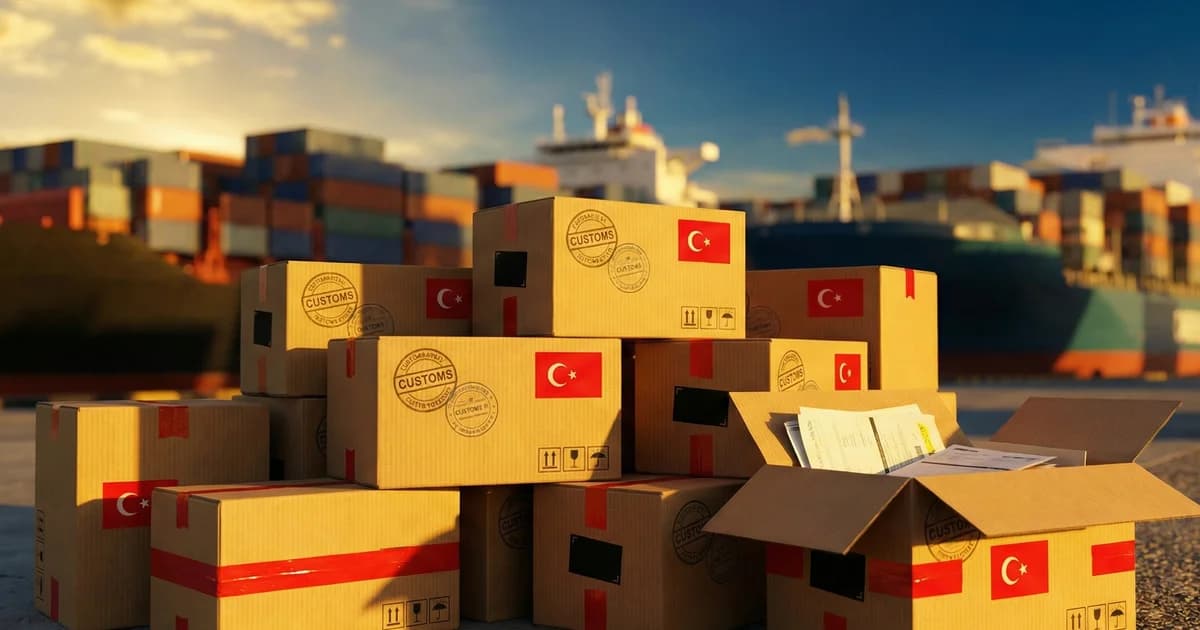

Germany's VerpackG, the UK's pEPR scheme and France's AGEC law: everything exporters need to know about European packaging regulations, certifications and a practical compliance checklist.
Why Packaging Is a Make-or-Break Factor in the European Market
Europe has the world's strictest packaging regulations. But knowing these rules gives you a decisive competitive edge. A surprising number of exporters lose business not because of their product, but because of their packaging.
Germany and the UK rank among Turkey's top corrugated packaging export destinations. The majority of Turkish exporters producing corrugated boxes serve firms that ship to EU and UK markets. But entering these markets is not just about manufacturing quality products. Your packaging must also comply with the destination country's environmental regulations, labeling requirements and sustainability expectations -- and this is every bit as important as the product itself.
In this guide, we will walk through the current packaging regulations that exporters targeting Europe need to know, examining requirements country by country. We will cover Germany, the UK and France in detail, the EU-wide PPWR regulation, and practical steps for compliance.
1. Germany: VerpackG and Mandatory LUCID Registration
Germany is Europe's largest economy and one of Turkey's most important export markets. It also has some of the continent's most stringent packaging regulations.
What Is VerpackG (the Packaging Act)?
Germany's Packaging Act (Verpackungsgesetz -- VerpackG) applies to all companies distributing packaged goods on the German market. The critical point here is that your company does not need to be based in Germany or the EU. Any firm exporting packaged goods from Turkey to Germany falls within the scope of this law.
What Is LUCID Registration and Why Is It Mandatory?
Every company placing packaged goods on the German market must register with the LUCID Packaging Register (verpackungsregister.org). Registration is free and completed online. In addition to registration, companies must sign a participation agreement with an approved Dual System operator.
What is a Dual System? In Germany, packaging waste collection and recycling is managed by privately licensed companies (such as Der Grune Punkt, Interseroh and Reclay). As a producer or exporter, you pay a participation fee to one of these systems to ensure your packaging enters the recycling stream.
What Changed in 2025?
- Stricter audits: German authorities are conducting more rigorous LUCID compliance checks.
- Increased customs controls: Non-EU exporters face heightened packaging compliance checks at customs.
- Eco-modulated fees: Companies using highly recyclable packaging pay lower participation fees, while fees for hard-to-recycle packaging have increased.
- Marketplace enforcement: Online platforms such as Amazon and eBay are legally required to verify sellers' LUCID registration. Non-compliant sellers are blocked from these platforms.
Penalties
VerpackG violations can result in fines of up to EUR 200,000 per violation. In repeat cases, the amount can be higher. Additionally, non-compliant products can face a sales ban: retailers must immediately remove non-compliant products from shelves.
2. United Kingdom: The Post-Brexit pEPR Scheme
Although the UK has left the EU, it continues to tighten its packaging regulations. The revised pEPR (Packaging Extended Producer Responsibility) scheme, which came into effect in April 2025, introduces new obligations for exporters.
pEPR Thresholds
- Basic threshold: Companies with a minimum annual turnover of GBP 1 million and responsible for more than 25 tonnes of packaging per year fall within pEPR scope.
- Large producer threshold: Companies with GBP 2 million or more in turnover and more than 50 tonnes of packaging are classified as "Large Producers." These firms must pay EPR fees, submit data reports and meet recycling obligations.
Recyclability Labeling
From 31 March 2026, recyclability labeling will be mandatory on all primary and shipment packaging (excluding plastic films and flexibles). For plastic films and flexibles, the deadline is 31 March 2027. Labels must include the "Recycle Now" logo along with a "recycle" or "do not recycle" designation.
Modulation System
Starting from the 2026-2027 financial year, fees will be progressively adjusted based on packaging recyclability. Highly recyclable packaging (RAM Green rated) will benefit from decreasing fees, while poorly recyclable packaging (RAM Red rated) will face progressively higher fees with escalating modulation factors.
Good news for exporters: Corrugated cardboard inherently has a high recycling rate. Exporters using corrugated boxes therefore have a strong potential to benefit from the modulation system.
3. France: The AGEC Law and Europe's Broadest EPR Scope
France is Europe's most ambitious country when it comes to packaging regulation. The AGEC Law (Anti-Waste for a Circular Economy Act), enacted in 2020, has comprehensively expanded producer responsibility for packaging.
January 2025: B2B Packaging Now Included
As of 1 January 2025, France's EPR scope was expanded to include industrial and commercial (B2B) packaging. This makes France the country with the broadest EPR scope in Europe. Not just consumer-facing packaging, but all packaging -- including shipping boxes between factories -- now falls under EPR obligations.
No Threshold: A Single Package Is Enough
Unlike Germany and the UK, France has no minimum threshold (de minimis). Even if you send a single packaged product to the French market, you are subject to EPR registration. This is a particularly critical point for small-volume exporters.
Authorized Representative (Mandataire) Requirement
Companies not established in France must appoint a French authorized representative (mandataire) to fulfill EPR obligations. This representative handles the SYDEREP/UID registration, signs the Producer Responsibility Organization (PRO) contract and pays the fees. The main PROs in France are Citeo, Adelphe and Leko.
Mandatory Triman Logo
The Triman logo is mandatory on all packaged products sold in France. This logo indicates to consumers that the product or its packaging falls within a separate collection scheme. The logo has specific size and colour standards (black figure, orange frame, minimum 10 mm height).
4. EU-Wide: PPWR -- The New Packaging and Packaging Waste Regulation
Beyond individual country regulations, a new EU-wide framework regulation has also come into force. The PPWR (Packaging and Packaging Waste Regulation) entered into force on 11 February 2025 and will apply from 12 August 2026.
Key PPWR Provisions for Exporters
- Empty space limitation (2030): Grouped packaging, transport packaging and e-commerce packaging will be subject to a maximum 50% empty space ratio. Unnecessary layers, false bottoms and structures that increase the perception of volume will be banned.
- PFAS ban (August 2026): Per- and polyfluoroalkyl substances, known as "forever chemicals," will be banned from packaging.
- Harmonized labeling (2028): Packaging must carry standardized labels with pictogram-based material composition information.
- Recyclability (2030): All packaging must be designed to be recyclable.
The PPWR serves as an overarching framework above individual EU member state regulations. However, existing national rules will remain valid during the transition period. For exporters, this means tracking both country-level and EU-wide requirements simultaneously.
5. REACH Compliance: The Exporter's Role
REACH (Registration, Evaluation, Authorisation and Restriction of Chemicals) is the EU's chemicals regulation. Packaging materials can fall within its scope.
Key point: Non-EU manufacturers are not directly bound by REACH obligations. However, the EU-based importer is responsible for ensuring that the products they import (including packaging) comply with REACH. As a Turkish exporter, what is expected of you is to provide the necessary technical data and compliance information to your EU buyer.
In practice, this means:
- Chemicals used in your packaging materials (inks, adhesives, coatings) need to be checked against the SVHC (Substances of Very High Concern) list.
- You are expected to provide your buyer with a Safety Data Sheet (SDS) or a compliance declaration.
- If you choose, you can appoint an Only Representative in the EU to manage the REACH process directly.
6. The CE Marking Myth: CE Is Not Required for Packaging
A common misconception among exporters is that "every product shipped to Europe must carry a CE mark." While this may apply to the product itself, CE marking is not required for packaging and can even constitute misuse.
CE marking applies to products covered by specific EU directives (electronic devices, machinery, medical devices, etc.). Corrugated cardboard boxes, carton packaging and transport packaging are not covered by these directives. Using a CE mark on packaging without a valid basis is considered a misleading practice.
What does apply to packaging: Environmental and waste management requirements under the Packaging and Packaging Waste Directive (94/62/EC) -- not CE marking.
7. FSC and PEFC Certifications: A Competitive Advantage
FSC (Forest Stewardship Council) and PEFC (Programme for the Endorsement of Forest Certification) are international certification systems that verify that the raw materials used in paper and cardboard-based packaging come from sustainable forestry practices.
While not legally mandatory, the vast majority of European buyers prioritize these certifications in their supplier selection. Retail chains and brand owners in particular demand FSC or PEFC-certified packaging due to their supply chain sustainability commitments.
For a company exporting from Turkey to Europe, holding these certifications:
- Provides a significant advantage in tender evaluation processes.
- Contributes to the buyer's corporate sustainability reporting.
- Strengthens long-term supplier relationships.
- Enhances brand perception and credibility.
8. Recycling Symbols: Which Ones Are Required Where?
Recycling symbols used on packaging in the European market vary by country and packaging type. Knowing which symbol is required where is essential for exporters.
- Green Dot (Der Grune Punkt): Formerly mandatory in Germany, it is no longer required but remains widely used as an indicator of Dual System participation. Note: this symbol does not mean "recyclable" -- it only indicates that the producer contributes to recycling financing.
- Mobius Loop: The triangular arrow symbol indicates that the material is recyclable. It is widely used but is not a specific national requirement.
- Triman logo: Mandatory in France. Indicates that the product or its packaging falls within a separate collection scheme.
- PPWR harmonized labels (from 2028): A standardized pictogram-based labeling system will come into effect across the EU. This system will unify the various country-specific labeling requirements under a single standard.
Practical tip: If you export to multiple European countries, allocate space on your packaging design to accommodate all target markets' labeling requirements. Filling this space before printing is far more economical than producing separate packaging for each market.
9. Professional Print Quality Expectations
Beyond regulatory requirements, there is another dimension that should not be overlooked: visual quality expectations.
European consumers and retailers regard packaging as an integral part of the product. Faded colors, misregistered printing, low-resolution graphics or poor cutting create a negative perception regardless of how good the product itself may be. In competitive retail environments where shelf presence is crucial, your packaging is your brand's first impression.
Offset printing technology offers significantly higher colour accuracy, resolution and detail compared to flexographic printing. For exports targeting the European market, offset-printed corrugated boxes are one of the most effective solutions for meeting these high visual quality expectations.
10. Practical Compliance Checklist for Exporters
The following checklist summarizes the key compliance steps for companies exporting packaged goods to Europe:
- Identify target country regulations: Determine which rules apply for Germany (VerpackG/LUCID), the UK (pEPR), France (AGEC/EPR) or other EU countries.
- Complete registration obligations: Finalize mandatory registrations such as LUCID (Germany), pEPR (UK) and PRO membership (France), or coordinate this process with your buyer.
- Appoint an authorized representative (if required): Do not overlook the mandatory authorized representative (mandataire) requirement, particularly for France.
- Prepare your packaging material data: Be ready with the technical data, SVHC checks and compliance declarations you need to provide to your buyer under REACH.
- Meet labeling requirements: Allocate space in your packaging design for the Triman logo (France), recycling symbols and post-2028 PPWR harmonized labels.
- Evaluate FSC/PEFC certification: If you do not yet hold these certifications, begin preparing your supply chain for the certification process.
- Verify your print quality: Assess whether your current capabilities meet the professional visual quality expected by the European market.
- Do not use CE marking: Do not place a CE mark on your packaging without a valid basis.
- Stay current with updates: With the PPWR being phased in, new rules will take effect between 2026 and 2030. Regular monitoring is critical.
Choose the Right Packaging Partner for Your Exports
At MFS Ambalaj, we have been serving export-focused companies with the majority of our production since 2011. We closely follow the European market's strict environmental regulations and high quality expectations, providing our exporting clients with packaging solutions that meet these standards.
Our offset-printed corrugated boxes deliver the professional print quality that Europe expects, while our recyclable material structure meets sustainability requirements. We also offer R&D support for size, material and print optimization tailored to the specific product you are exporting.
The positive feedback we receive from our export clients' European buyers confirms that the right packaging builds not just product protection, but brand trust.
Contact us for your export packaging needs:
- Phone: +90 332 345 43 03
- Email: info@mfsambalaj.com
- Web: mfsambalaj.com/contact
Get in touch for a packaging solution tailored to your product and target market -- let us prepare a custom proposal for you.